
Learning roadmap
How to Learn REST API Development in .NET
The fastest way to learn REST API development is a six-step path: master the HTTP fundamentals, get resource modeling and CRUD right, secure the API, add the advanced concerns, test everything, then document and deploy. Here is exactly how to do it, with free resources along the way.
Step 1: Master the HTTP fundamentals
REST is an architectural style built on top of HTTP, so start with HTTP itself: methods, status codes, and headers. Then learn the Richardson Maturity Model. It gives you a ladder for judging any API: level 1 is resources, level 2 is proper HTTP methods and status codes, level 3 is hypermedia. If your API uses POST for everything and returns 200 OK for errors, you are writing RPC over HTTP, not REST. Getting status codes right is the cheapest improvement you can make today.
Free resource: HTTP status codes every REST API should use
Step 2: Model resources and get CRUD right
Resources are nouns, not verbs. Learn to design collection and item endpoints, handle child resources, and choose between PUT and PATCH deliberately. Then get the unglamorous parts right: validation with Problem Details so every error has the same shape, global exception handling, and searching, filtering, sorting, and pagination from day one. Retrofitting pagination onto an API that clients already consume is painful. How you organize endpoints matters too, and the REPR pattern is a clean way to do it.
Free resource: The REPR pattern for organizing API endpoints

Step 3: Secure your API
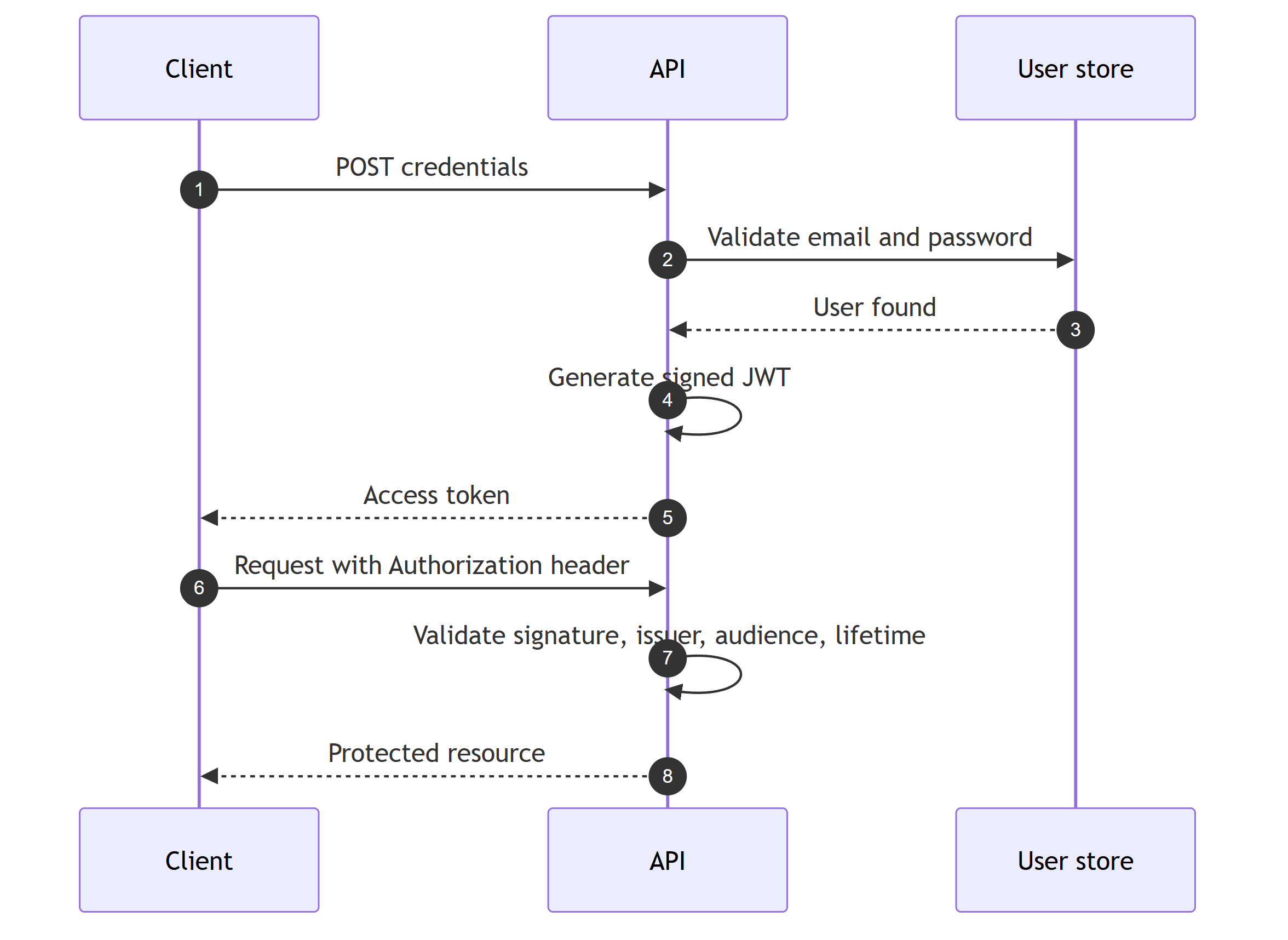
Understand the difference between authentication (who you are) and authorization (what you can do). In ASP.NET Core that means Identity for user management, JWT access tokens with refresh tokens for authentication, and a progression of authorization strategies: role-based, attribute-based, and owner authorization for protecting individual resources. Do not stop at "the endpoint requires a token". Most real authorization bugs are about which user can touch which resource.
Free resource: JWT authentication in ASP.NET Core
Step 4: Add the advanced concerns
This step separates a demo from a production API. HTTP caching cuts response times and server load. Optimistic locking prevents lost updates under concurrency. Cursor pagination scales where offset pagination falls over. Rate limiting protects you from abusive clients, idempotency makes retries safe, and webhooks plus asynchronous REST APIs handle long-running work. You will not need all of these on every project, but you need to know they exist and when to reach for them.

Step 5: Test everything
A test suite is what lets you change an API without fear. Learn the layers: unit tests for your domain logic, integration tests that run requests through the real API pipeline against a real database, WireMock for faking external services, and a few end-to-end tests for the critical paths. Then wire the whole suite into CI/CD so nothing reaches production untested.
Free resource: Unit testing best practices in .NET
Step 6: Document and deploy
An API nobody can consume might as well not exist. Generate OpenAPI documentation from your code, expose it with Swagger or a modern UI like Scalar, and document your API versions and authentication flows. Then take it to production: deploy to a cloud platform like Azure, apply database migrations safely, add monitoring with Application Insights, and automate the whole path with GitHub Actions so deployment is a non-event.
Want the structured version of this path?
You can absolutely learn REST API development from free articles and videos. I've published plenty of both. The tradeoff is time: you assemble fragments from different sources, built on different codebases, often with conflicting advice.
Pragmatic REST APIs is this roadmap as a single, coherent course. We build one production-ready API in ASP.NET Core: CRUD with EF Core and PostgreSQL, validation with Problem Details, HATEOAS, versioning, JWT authentication with refresh tokens, HTTP caching, rate limiting, a full testing strategy with WireMock, OpenAPI documentation, and deployment to Azure. 9 chapters, 14+ hours of video, full source code, lifetime access. 1,900+ engineers have taken it.
Frequently asked questions
How long does it take to learn REST API development?
You can build your first working API in a weekend. Getting comfortable with the production concerns (security, versioning, caching, testing, deployment) usually takes a few months of practice. A structured course compresses that timeline because you see every concern implemented on one codebase instead of piecing together fragments from different tutorials.
What should I know before learning REST API development?
A basic understanding of C# and ASP.NET Core is enough to start. You do not need prior API experience. Familiarity with Entity Framework Core and Docker helps but is not required, and you can pick both up along the way.
Do I need to learn HATEOAS?
You should understand it, because it is level 3 of the Richardson Maturity Model and it comes up in API design discussions constantly. In practice, most production APIs stop at level 2, and that is fine. Learn how HATEOAS works and where it pays off, like driving client behavior, then make a deliberate choice per project.
Can I learn REST API development from free resources?
Yes, and you should start there. I publish free in-depth articles and YouTube videos on REST APIs in .NET. The tradeoff is coherence: free content is scattered across different codebases and opinions. A course gives you one system built end to end with every decision explained.
Is there a course that covers this entire roadmap?
Yes. Pragmatic REST APIs walks this exact path on one production-ready API in ASP.NET Core: fundamentals, CRUD done right, authentication and authorization, advanced concerns, testing, documentation, and deployment to Azure. It is 9 chapters and 14+ hours of video with full source code and lifetime access.