
Learning roadmap
How to Learn Clean Architecture in .NET
The fastest way to learn Clean Architecture is a five-step path: understand the dependency rule, learn what each layer owns, build a real project, add production concerns, then test everything. Here is exactly how to do it, with free resources for each step.
Step 1: Understand the dependency rule
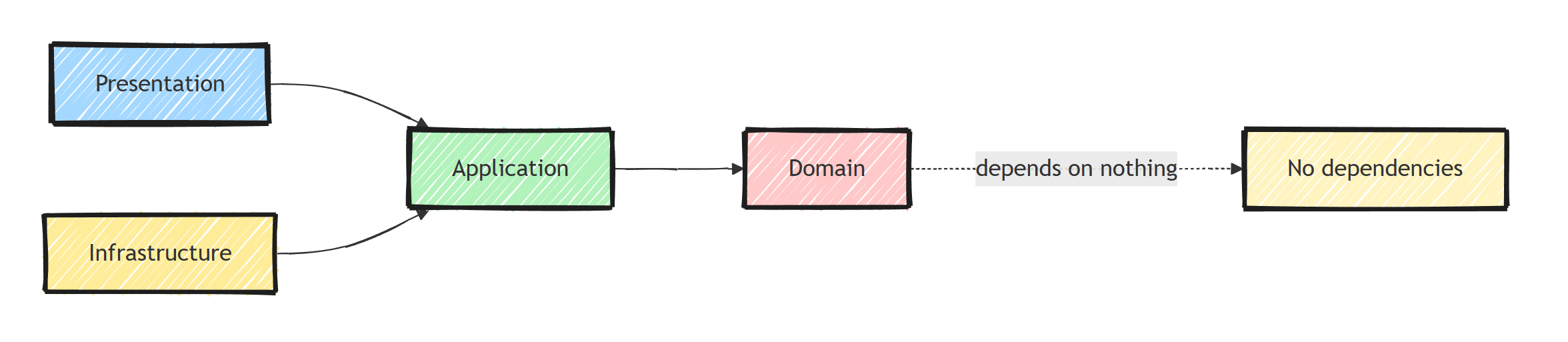
Clean Architecture boils down to one rule: source code dependencies point inward, toward the domain. Everything else follows from it. Before you touch project structure, make sure you understand why the domain layer must not depend on infrastructure, and what problems that solves. My free Clean Architecture guide covers the principles and the layers in detail.
Free resource: Clean Architecture in .NET: the complete guide
Step 2: Learn what each layer owns
The four layers (Domain, Application, Infrastructure, Presentation) each have a clear responsibility. The Domain layer holds entities, value objects, and business rules. The Application layer orchestrates use cases. Infrastructure implements external concerns like persistence. Presentation exposes your API. Most confusion with Clean Architecture comes from putting logic in the wrong layer.
Step 3: Build something real
Reading about architecture doesn't make you an architect. Building does. Pick a domain with real business rules (bookings, orders, subscriptions) and build it end to end. This is where you'll hit the questions tutorials skip: where does validation go, how do domain events work, how do you handle transactions.
Step 4: Add production concerns
A real system needs authentication, authorization, logging, caching, and reliable messaging. This is where Clean Architecture proves its value: each concern has an obvious home, and adding them does not disturb your domain logic.
Step 5: Test your architecture
Clean Architecture makes testing dramatically easier because the domain has no external dependencies. Learn unit testing for the domain and application layers, integration testing for infrastructure, and architecture tests to stop the dependency rule from eroding over time.
Free resource: Unit testing best practices in .NET
Want the structured version of this path?
You can absolutely learn Clean Architecture from free articles and videos. I've published plenty of both. The tradeoff is time: you piece together fragments from different sources, built on different codebases, often with conflicting advice.
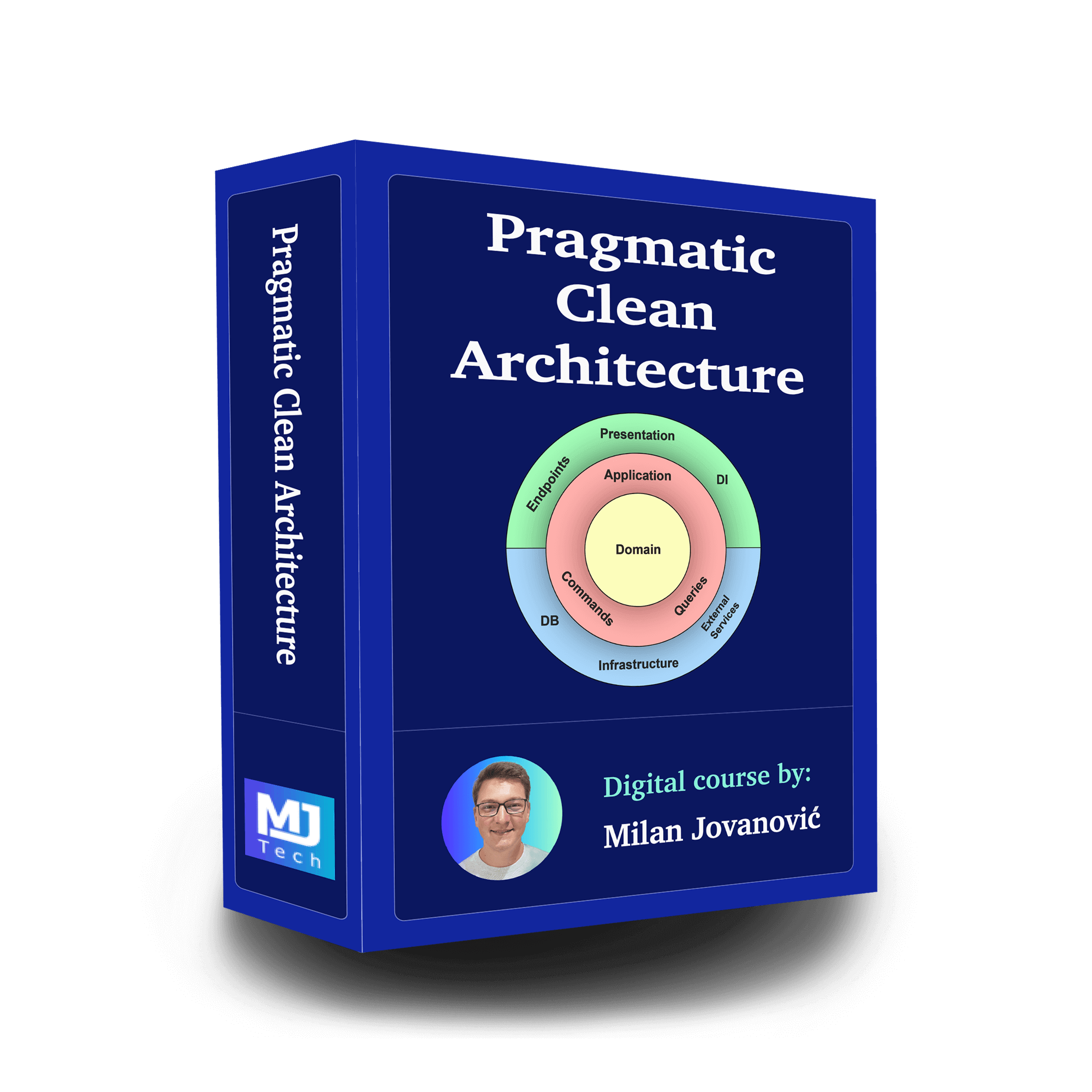
Pragmatic Clean Architecture is this roadmap as a single, coherent course. We build one production-ready application from scratch: a rich domain model with DDD, CQRS with MediatR, JWT authentication with Keycloak, the Outbox pattern, Redis caching, and a complete testing strategy. 10 chapters, 6+ hours of video, full source code, lifetime access. 5,000+ engineers have taken it.
Frequently asked questions
How long does it take to learn Clean Architecture?
You can understand the core principles in a weekend. Becoming comfortable applying them on a real project usually takes a few weeks of practice. A structured course compresses that timeline significantly because you see every decision made on a real system instead of piecing together blog posts.
Do I need to learn Domain-Driven Design first?
No. Clean Architecture and DDD complement each other, and the best way to learn them is together. The domain layer is where tactical DDD patterns like entities, value objects, and domain events naturally live.
What should I know before learning Clean Architecture?
You should be comfortable building APIs with ASP.NET Core and have some experience with Entity Framework Core. About 1 year of hands-on .NET experience is a good baseline.
Can I learn Clean Architecture from free resources?
Yes, and you should start there. I publish free in-depth articles and YouTube videos on Clean Architecture. A paid course adds structure, a complete real-world codebase, and production concerns that rarely get covered end to end in free content.
Is there a course that teaches all of this?
Yes. Pragmatic Clean Architecture walks through this exact path on a production-ready application: principles, a rich domain model with DDD, CQRS, authentication, the Outbox pattern, and a complete testing strategy. It is 6+ hours of video with full source code and lifetime access.