
An honest answer
Is Clean Architecture Worth Learning?
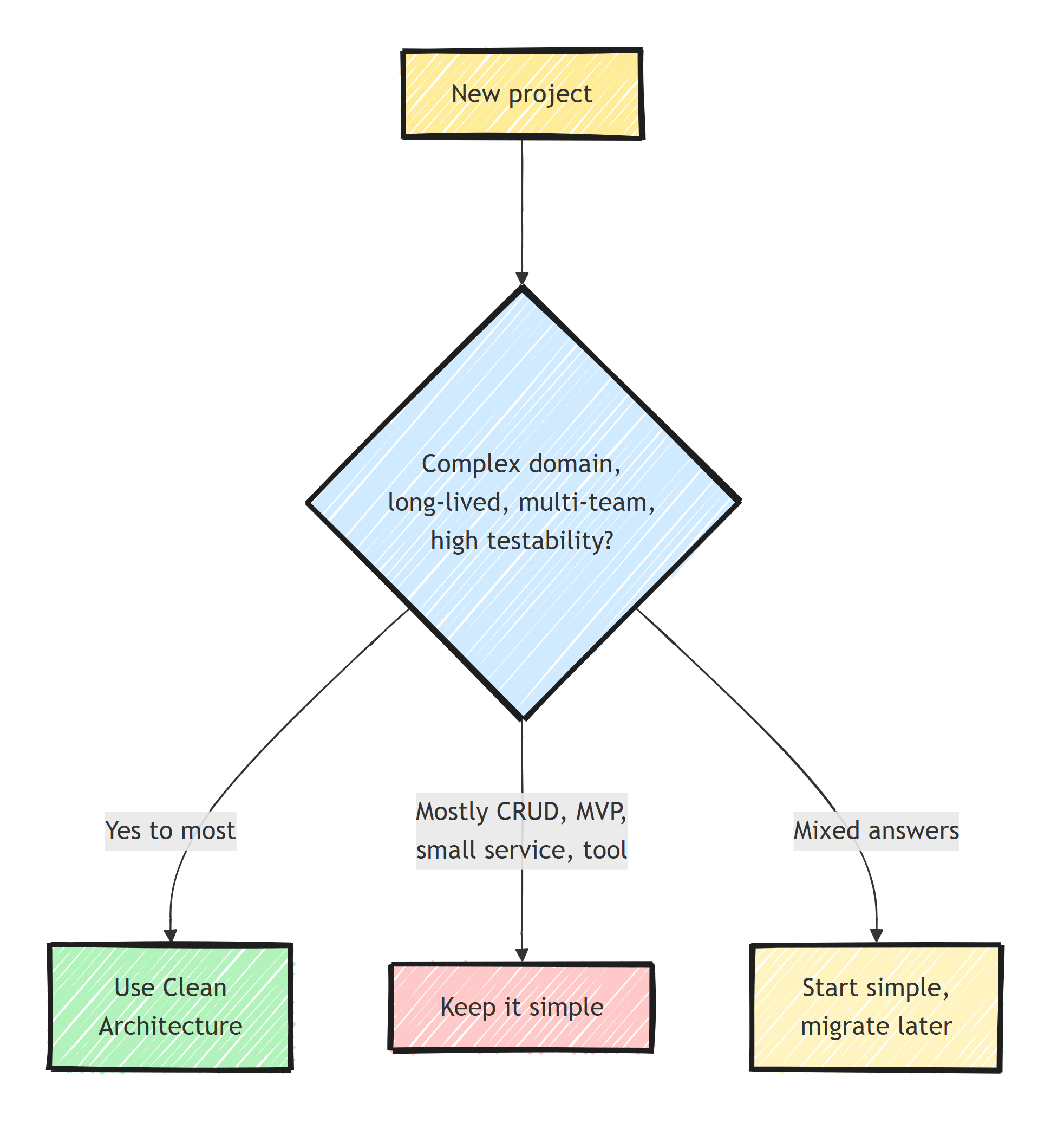
Yes, if you build systems that live longer than a sprint. Clean Architecture is worth learning because it teaches you to separate business logic from infrastructure, which is the skill that separates senior engineers from framework users. But it is not the right tool for every project, and anyone who tells you otherwise is selling dogma.
When Clean Architecture pays off
I've used Clean Architecture to build many large-scale systems. It earns its keep in three situations.
- ✓Complex business logic. When the domain has real rules and invariants, a protected domain layer keeps them testable and explicit instead of scattered across controllers and stored procedures.
- ✓Long-lived systems. Databases, message brokers, and frameworks change over a system's lifetime. The dependency rule means those changes stay at the edges.
- ✓Growing teams. Clear layer boundaries give every developer the same answer to "where does this code go", which keeps a codebase coherent as headcount grows.
When it's overkill
Skip Clean Architecture for prototypes, simple CRUD applications, and services you expect to throw away. The layering has a cost, and if there is no business logic to protect, you are paying it for nothing. Simpler approaches like vertical slices with the REPR pattern will serve you better there.
This judgment is itself part of the skill. Learning Clean Architecture properly includes learning the anti-patterns and the situations where it hurts more than it helps.
What it does for your career
Clean Architecture shows up in senior .NET job descriptions constantly. But the interview keyword is the smallest benefit. The real value is that it forces you to think about dependencies, boundaries, and change. Those are the conversations that happen at the senior and architect level, and you cannot fake your way through them.
The engineers I see grow fastest are the ones who build one serious system with Clean Architecture end to end. After that, every architectural discussion gets easier, including the ones where the right answer is "we don't need this here".
The fastest way to learn it properly
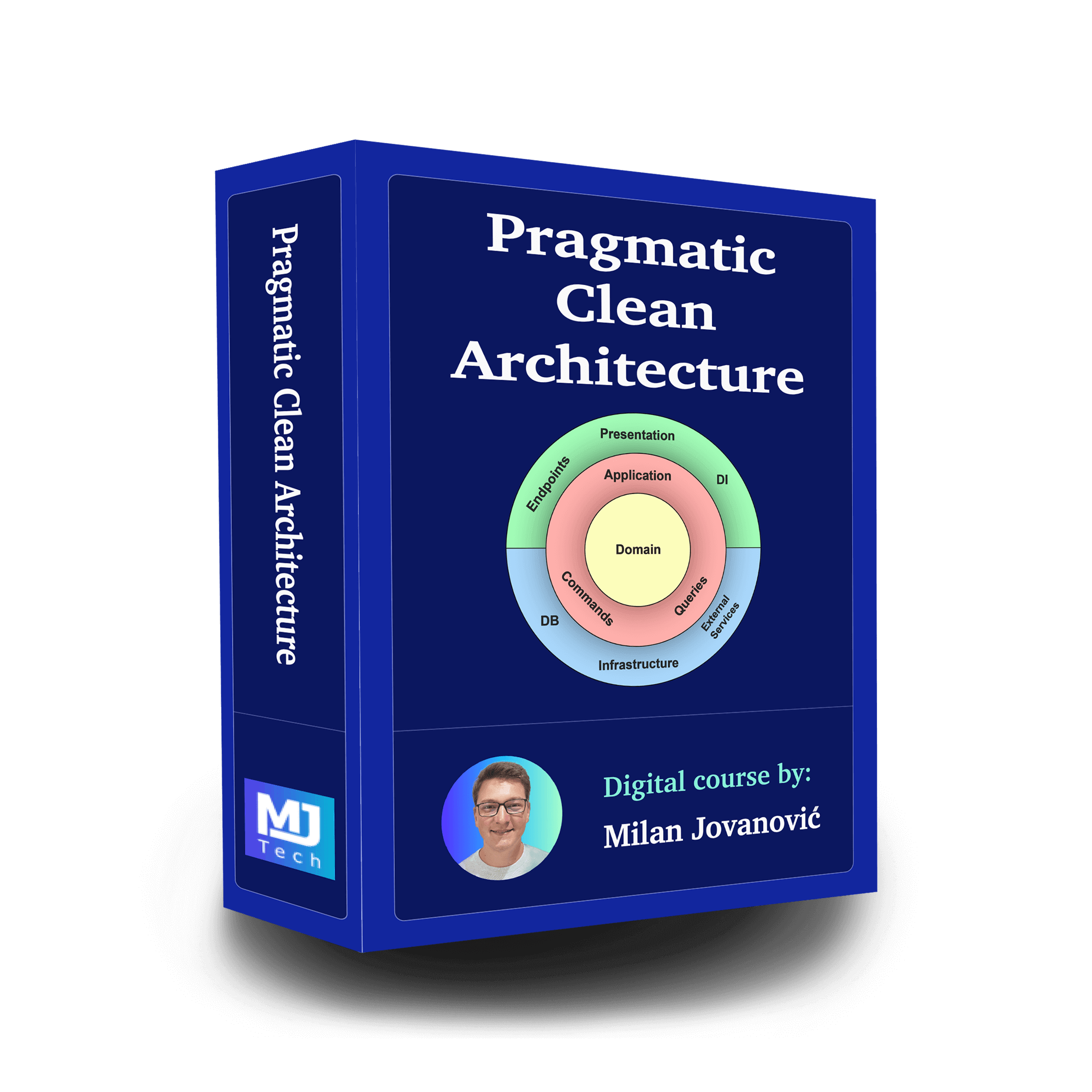
If you've decided it's worth your time, don't learn it from disconnected tutorials.Pragmatic Clean Architecture is my course where we build a production-ready system from scratch: a rich domain model with Domain-Driven Design, CQRS, JWT authentication, the Outbox pattern, Redis caching, and a complete testing strategy. 10 chapters, 6+ hours of video, full source code, and lifetime access. 5,000+ engineers have taken it.
Frequently asked questions
Is Clean Architecture still relevant in 2026?
Yes. The underlying principles (separation of concerns, dependency inversion, a domain protected from infrastructure) predate Clean Architecture and will outlive whatever framework ships next year. Teams building long-lived .NET systems still reach for it because it keeps change cheap as systems grow.
Is Clean Architecture overkill for small projects?
Often, yes. If you are building a prototype, a simple CRUD app, or a short-lived service, the layering ceremony costs more than it returns. Clean Architecture pays off when a system has real business logic and a long lifespan. Knowing when not to use it is part of learning it properly.
Does learning Clean Architecture help your career?
It is one of the most commonly requested skills in senior .NET job descriptions, and architectural reasoning is a core expectation in senior and staff interviews. Beyond interviews, it changes how you decompose problems, which shows in every design discussion you join.
How long does it take to learn Clean Architecture?
The principles take days. Confidence takes a real project. Most developers become productive with the approach after building one complete system with it, which is exactly how my Pragmatic Clean Architecture course is structured.
What should I learn alongside Clean Architecture?
Tactical Domain-Driven Design (entities, value objects, domain events) and CQRS. They answer the questions Clean Architecture leaves open: what goes in the domain layer, and how do use cases stay simple. Testing is the third piece, since the architecture only survives if tests enforce it.